Black mould removal in Teesside
Treating black mould properly means killing the growth with a biocidal wash, removing contaminated finishes, redecorating with a mould-resistant system and dealing with whatever is keeping the surface wet. Room treatments run £300 to £900 on Teesside, and the moisture work alongside is what stops it returning next winter.
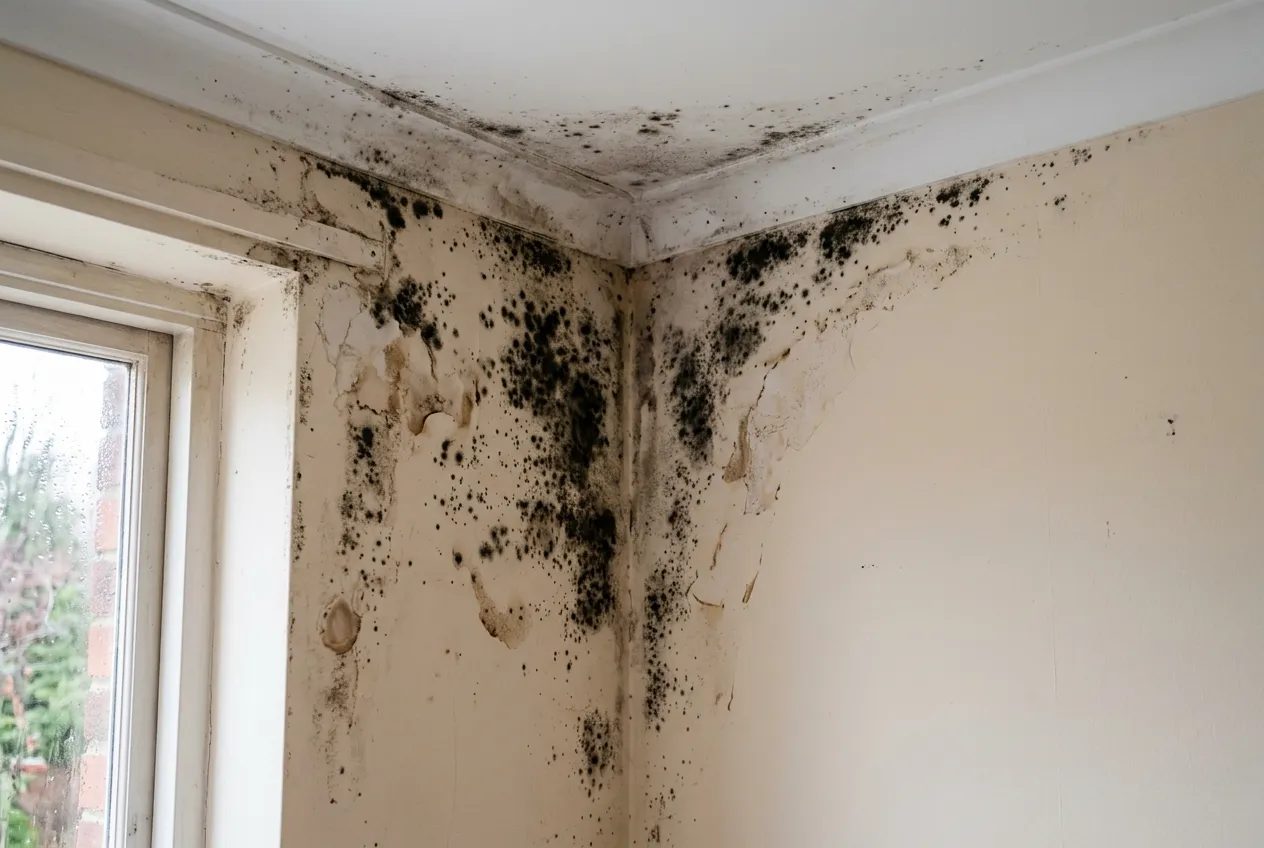
What black mould is and why it matters
The black speckling on cold bedroom corners and window reveals is usually Cladosporium or Aspergillus, and behind wallpaper or on chronically wet plaster it can be Stachybotrys, the species commonly called black mould. All of them need three things: a food source, which is dust, paint, paper or plaster; a temperature that ordinary rooms provide; and moisture, which is the only one you can take away.
The health case for taking it seriously is now well established. UK guidance from the Health and Safety Executive and NHS advice both link damp and mould exposure to respiratory infections, worsened asthma and allergic reactions, with infants, older people and anyone with an existing lung condition most at risk. Since the coroner's findings in the death of Awaab Ishak, damp and mould in rented housing has moved from a nuisance to a legal priority, with fixed timescales for social landlords in England to investigate and remedy reported hazards.
What a proper treatment includes
| Element | Detail | Guide price |
|---|---|---|
| Surface treatment, one room | Biocidal wash, HEPA vacuum, sealing of spores | £300 to £500 |
| Treatment plus redecoration | Contaminated paper stripped, anti-mould primer and paint | £500 to £900 |
| Contaminated plaster removal | Hacking off and renewing blown or salt-laden plaster | £45 to £70/m² |
| Whole-house treatment | Several rooms, ventilation upgrade included | £1,200 to £3,000 |
| Post-work air and surface check | Confirming the treatment worked before decorating | £80 to £200 |
Bleach alone is not a treatment. It removes the colour from the surface and leaves both the roots within porous plaster and the residual spores, which is why the black returns to exactly the same outline within weeks. Professional work uses a biocidal solution with dwell time, physical removal of affected soft materials and finishes, HEPA extraction rather than dry brushing, and a fungicidal paint system on redecoration.
The part that determines whether it comes back
Mould is a moisture indicator. Treating it without addressing the water is a repainting exercise with a six-month life. So the sequence is always: identify the moisture source, fix it, dry the fabric, then treat and redecorate. On Teesside the source breaks down roughly as follows: winter condensation on cold surfaces in the great majority of homes, penetrating damp through an exposed elevation in a smaller share, and plumbing leaks or rising damp in the remainder. That is why condensation control so often accompanies mould work, and why a survey is worth the money on a recurring problem.
Doing it safely
Small patches, under about a square metre on a hard surface, are a reasonable DIY job with gloves, an FFP3 mask, eye protection and the windows open. Beyond that, or where anyone in the house has asthma, COPD or a compromised immune system, disturbing a large colony without containment and extraction spreads spores through the whole property. Contaminated soft furnishings, carpets and mattresses generally cannot be salvaged, and quotes should say so plainly rather than implying that everything can be cleaned.
Renting, and what you are entitled to
Tenants should report mould in writing and keep photographs with dates, because the written trail is what triggers a landlord's repair duties and any council enforcement under the housing health and safety rating system. Landlords benefit from acting quickly for a plain commercial reason too: a ventilation upgrade and one redecoration cost far less than a disrepair claim, an enforcement notice or the cost of a void property with mould-damaged plaster.