Basement and cellar waterproofing in Teesside
Below-ground rooms are waterproofed either by tanking the walls with a cementitious system at £80 to £150 per square metre, or by fitting a cavity drain membrane with a drainage channel and sump pump, which runs £6,000 to £15,000 for a full basement. The right choice depends on water pressure, wall condition and what the room is being used for.
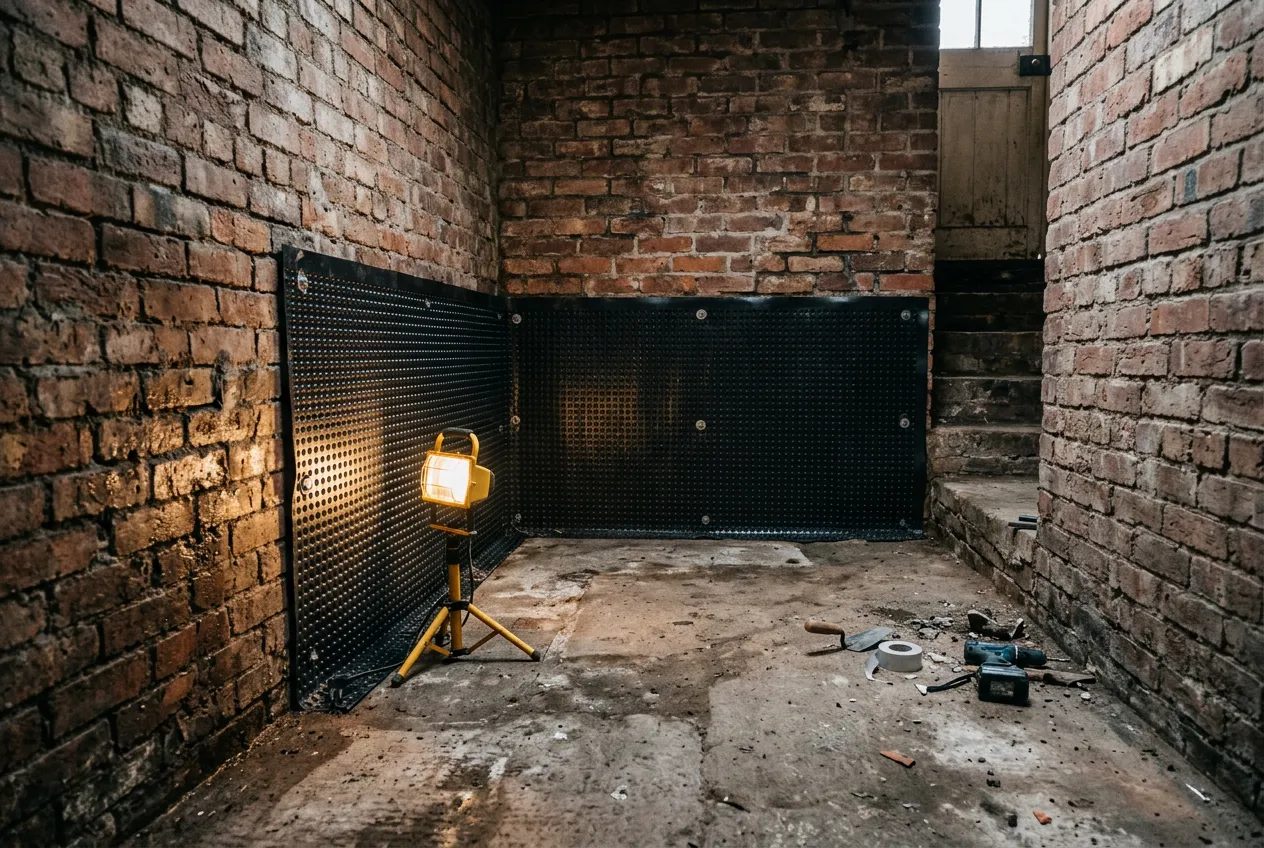
Teesside cellars
Plenty of local housing came with a below-ground room. The Victorian and Edwardian terraces of Linthorpe, Gresham, central Stockton, Norton and the older Hartlepool streets often have a coal cellar under the front room or a full-depth basement under the whole footprint. They were built as storage, ventilated through a pavement grate or airbrick, and never intended to be dry in the way a habitable room must be.
Two things then happened. The grates and airbricks were blocked up during modernisation, removing the ventilation that kept them tolerable. And homeowners started converting them into utility rooms, gyms, offices and even bedrooms, which raises the standard from "damp but usable" to genuinely dry and warm. The heavy boulder clay under most of the conurbation holds groundwater against those walls after rain, so the pressure is real rather than theoretical.
The two systems, and how to choose
| System | How it works | Best for | Guide price |
|---|---|---|---|
| Type A: cementitious tanking | Multi-coat waterproof slurry bonded to the wall, holding water back | Sound masonry, modest water pressure, storage or utility use | £80 to £150/m² |
| Type C: cavity drain membrane | Studded membrane manages water into a perimeter channel and sump, then pumps it out | Higher water pressure, uneven or salt-laden walls, habitable conversions | £150 to £250/m² plus sump |
| Type B: structurally integral | The concrete structure itself is the barrier | New build and full underpinning projects | Project-specific |
| Full basement conversion, all in | Waterproofing, drainage, floor, electrics, plaster | Habitable rooms | £6,000 to £15,000+ |
Tanking is cheaper and works well where the walls are stable and the water is a nuisance rather than a head of pressure. Its weakness is that it relies on a perfect bond, and a single pinhole or a wall that later moves creates a leak at the weakest point. A cavity drain membrane does not fight the water at all; it accepts that the wall will be damp, keeps the room side dry, and channels whatever arrives to a sump. That is why it dominates habitable conversions, and it is also why the pump matters so much.
Pumps, power and maintenance
A drained system is only as reliable as its sump. Specify twin pumps in one chamber so a failure is not a flood, a battery backup for power cuts, and a high-level alarm. Servicing is annual: clean the chamber, test the float switches, check the non-return valve, and confirm the discharge point still runs freely. Guarantees on drained systems commonly require that annual service to remain valid, and a surprising number of claims fail on exactly that point.
Standards, design and guarantees
Below-ground waterproofing in the UK is designed to BS 8102, which sets out grades of use from basic storage through to fully habitable, and expects a waterproofing design specialist to be involved. In practice that means a surveyor holding CSSW, a written design that states the grade being achieved, and where habitable use is intended, a system with combined protection rather than a single line of defence. Insurance-backed guarantees of 10 or 20 years are the norm and, as with any damp work, are only meaningful when underwritten by an independent provider.
Building control approval is needed for converting a cellar into habitable space, and there are practical hurdles worth checking before spending anything: floor to ceiling height after the floor build-up, means of escape, ventilation, and whether the existing drainage can accept a pumped discharge.
Cheaper things worth ruling out first
Not every damp cellar needs a waterproofing system. Reopening a blocked pavement grate or airbrick, redirecting a downpipe that discharges beside the wall, clearing a blocked gully, and lowering an external ground level that has crept above the internal floor are all inexpensive and sometimes sufficient for a storage cellar. Those checks belong in a damp survey before anyone quotes for membrane.